



 Purple Dragon
Guppy Fish
Dumbo Ear Red Mosaic Guppy Fish
Dumbo Ear Red Mosaic Guppy Fish
Regular price
$15.00 USD
Regular price
Sale price
$15.00 USD
Unit price
per
Shipping calculated at checkout.
Couldn't load pickup availability
📦 Live Fish Shipping from $25
· Professionally packed for safe arrival
What Guppy Will I Receive?
What Guppy Will I Receive?
You’ll receive a healthy, active guppy matching the strain and gender selected above.
Each fish is individually checked before packing. Because every guppy is unique, natural variations in color, pattern, fin shape and markings are expected.
♂ Male vs ♀ Female — Which Should I Choose?
♂ Male vs ♀ Female — Which Should I Choose?
Male
More colorful · Larger fins · Best for display
Female
Fuller body · Usually larger · Great for breeding/groups
Want both? Mix males & females in the same order.
ABOUT THIS GUPPY
About the Dumbo Ear Red Mosaic Guppy Fish
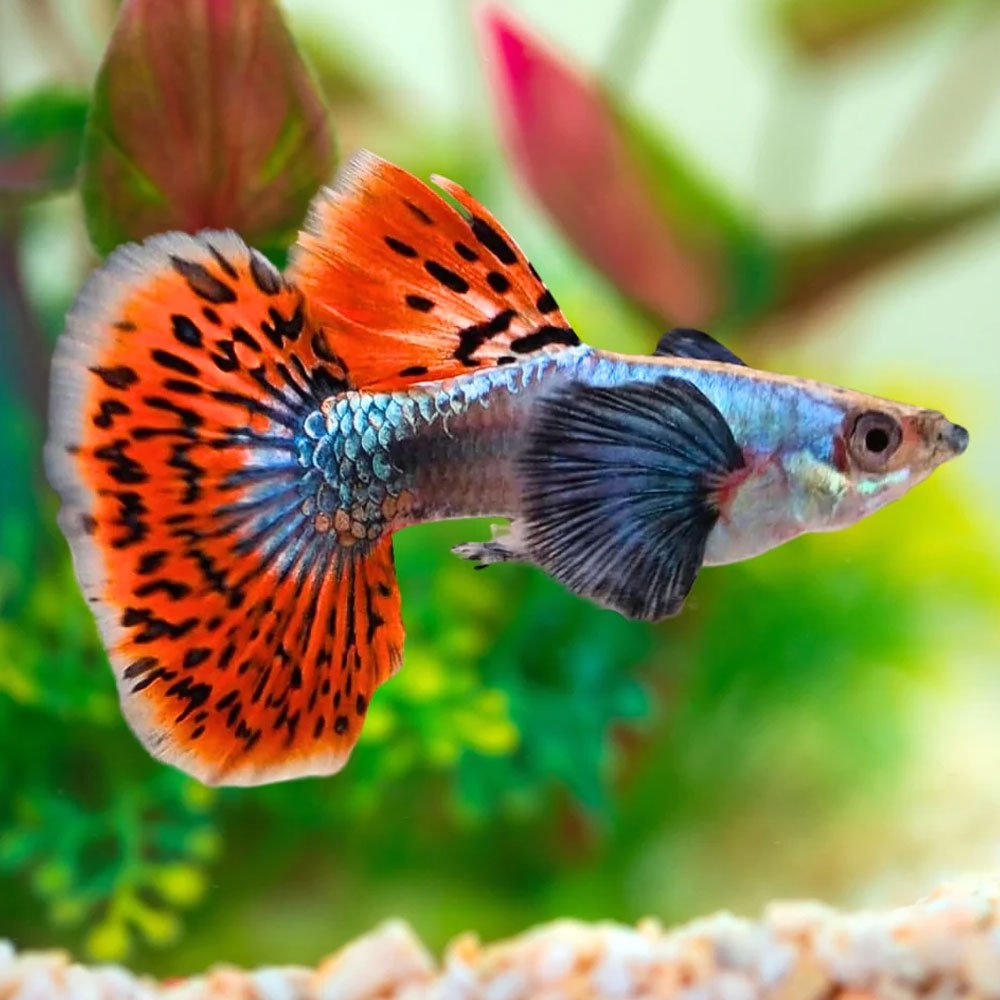
The Dumbo Ear Red Mosaic Guppy Fish combines oversized Dumbo-style pectoral fins with vivid red coloration and intricate Mosaic patterning. The enlarged side fins create extra movement around the body, while the broad tail carries a mix of red tones and detailed markings that become especially noticeable when the fish is fully displaying its finnage.
This variety belongs naturally within our Premium Dumbo Ear Guppies , where oversized pectoral fins are the defining visual trait. Within this family, the Dumbo Ear Red Mosaic Guppy adds another layer of detail by pairing the signature Dumbo silhouette with patterned red finnage rather than a cleaner solid-color tail.
🐟
Oversized Dumbo Fins
Large pectoral fins create a distinctive profile
🔴
Rich Red Color
Warm red tones dominate the decorative finnage
🎨
Mosaic Pattern
Detailed markings add texture across the tail
✨
Multi-Fin Display
Large side fins and tail create movement from every angle
HIGHLIGHTS
Why You'll Love the Dumbo Ear Red Mosaic Guppy Fish
✓
Oversized pectoral fins create the signature Dumbo appearance and add extra movement beside the body
✓
Rich red coloration gives the fish a bold, warm-toned aquarium presence
✓
Mosaic-style markings add significantly more detail than a simple solid-red tail
✓
Broad decorative finnage makes the pattern visible from both side and angled viewing positions
DUMBO RED MOSAIC VARIETY
What Makes the Dumbo Ear Red Mosaic Guppy Fish Unique?
The defining character of the Dumbo Ear Red Mosaic Guppy Fish comes from the interaction between its oversized pectoral fins and intricately patterned red tail. The Dumbo fins extend outward from the body and create movement near the front of the fish, while the Mosaic tail shifts the visual focus toward the rear with layered red markings. Together, these traits give the fish a fuller and more decorative appearance than either a standard Mosaic Guppy or a simpler solid-tail Dumbo variety.
For the closest comparison, explore the Dumbo Red Tail Guppy Fish , which keeps the oversized Dumbo pectoral fins and red color direction but uses a cleaner, less heavily patterned tail. You can also compare the Dumbo Santa Claus Guppy Fish , another member of the Dumbo family that pairs oversized pectoral fins with a different red-and-light color presentation.
✨
Every Dumbo Ear Red Mosaic Guppy Fish Is Unique
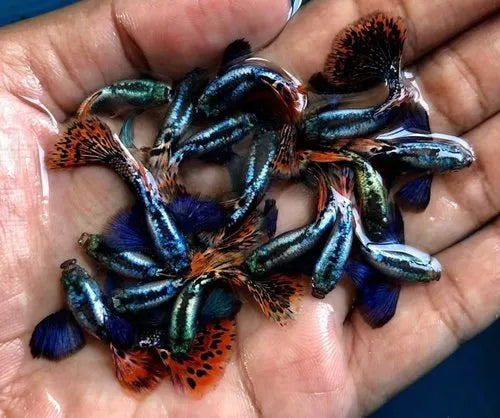
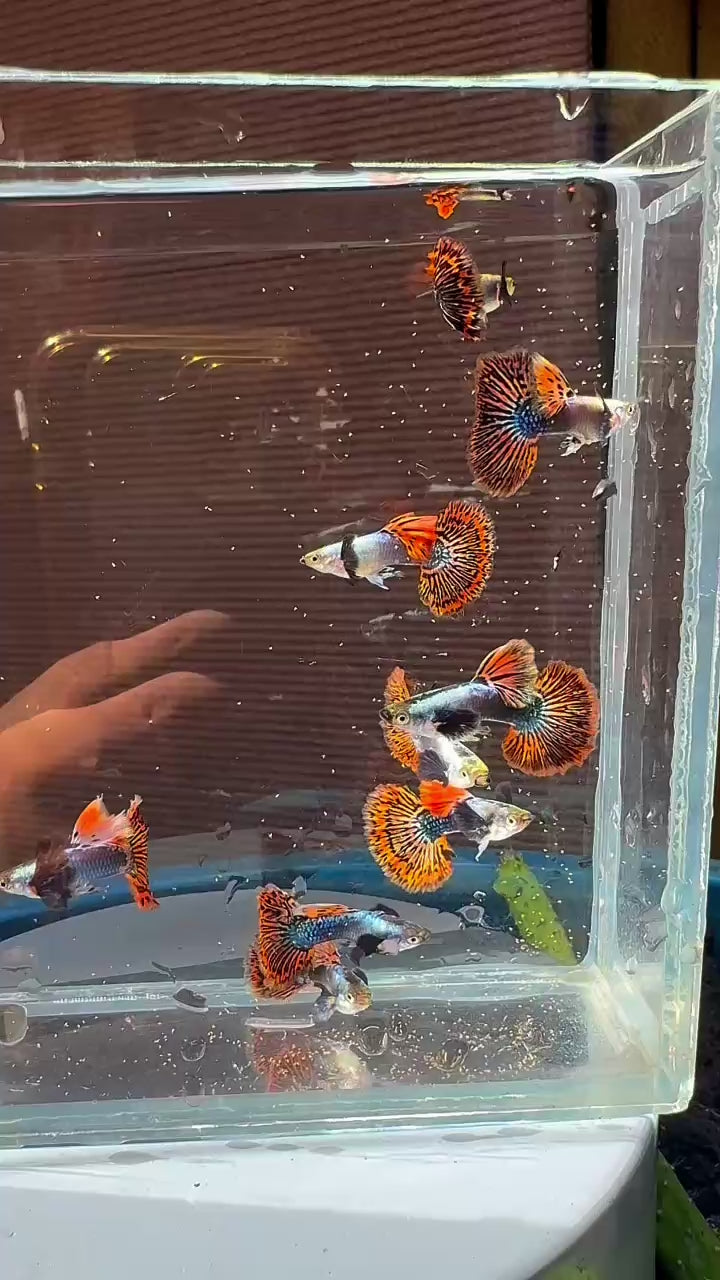
This is a Grower Pick variety, so product photos represent the general characteristics of the strain rather than the exact individual fish you will receive. Natural differences can occur in red intensity, Mosaic-pattern placement, pattern density, pectoral-fin size, tail shape, dorsal development, and overall finnage. Age, genetics, aquarium lighting, shipping stress, and tank conditions can also influence how strongly the coloration and markings appear.
EXPLORE MORE
Explore More Fancy Guppy Fish
If you enjoy the oversized Dumbo fins and detailed Red Mosaic pattern of the Dumbo Ear Red Mosaic Guppy Fish, explore our Fancy Guppy Fish collection to discover more Dumbo Guppies, Mosaic varieties, fancy-fin Guppies, and colorful patterned strains for your freshwater aquarium.


Buy 4, get 1 FREE.
Mix & match guppies. Choose 5, pay for 4.
0 / 5 selected
Choose 5 to complete your offer
Purple Dragon
 Blue Sapphire Dragon
 Purple Lavender Mosaic
 Full Gold 24K Ribbon Fin
 Koi Red Ear
 White Dragon
Selected fish subtotal
Choose your mix to see the total.
Lowest-priced eligible guppy is free. Final discount at checkout.
Handpicked fish. Colors & patterns vary.
Guppy Care GuideLoading customer photos and videos…
COMPLETE CARE GUIDE
Guppy Fish Care Guide
Everything you need to help your new Guppies settle in, stay healthy, and thrive in your aquarium.
Care LevelEasy
TemperamentPeaceful
Tank Size10+ Gallons
DietOmnivore
AT A GLANCE
Recommended Water Parameters
Temperature72–82°F
pH6.8–7.8
Ammonia0 ppm
Nitrite0 ppm
Nitrate<20–40 ppm
Tank Size10+ Gallons
Adult SizeUp to ~2 inches
Lifespan2–3 Years
Stability matters most.
Avoid chasing exact numbers with sudden water chemistry changes. A mature, cycled aquarium with stable parameters is generally safer than frequent rapid adjustments.
DAILY CARE
Creating a Healthy Guppy Aquarium
Ideal Tank Setup
Provide a fully cycled, filtered aquarium with plenty of open swimming space. Live plants can provide cover, visual barriers, and a more natural environment.
- Fully cycled aquarium
- Reliable filtration
- Open swimming space
- Live plants recommended
Feeding & Diet
Guppies are omnivores. Offer a varied diet rather than relying on only one food source.
- Quality micro pellets
- High-quality flakes
- Brine shrimp
- Daphnia and other suitable foods
Social Behavior
Guppies are active social fish and generally do well with other peaceful community species when tank size and water requirements are compatible.
- Active swimmers
- Peaceful community fish
- Enjoy group environments
- Avoid aggressive tank mates
Water Quality
Clean, stable water is one of the most important parts of Guppy care. Test the aquarium regularly and perform appropriate routine maintenance.
- Ammonia: 0 ppm
- Nitrite: 0 ppm
- Monitor nitrate
- Perform regular water changes
BEFORE DELIVERY
Prepare Before Your Guppy Arrives
Preparing the aquarium before delivery helps reduce unnecessary stress when your new fish arrives.
1
Cycle the Aquarium
Make sure the aquarium is established and biologically cycled before adding new fish.
2
Test the Water
Check temperature, pH, ammonia, nitrite, and nitrate before delivery day.
3
Prepare the Tank
Confirm filtration is running properly and provide plants or other appropriate cover.
4
Plan for Acclimation
Be available around delivery whenever possible so the fish can be brought indoors and acclimated promptly.
MALE OR FEMALE?
Understanding Guppy Sex Differences
Male Guppy
- Typically brighter and more colorful
- Usually develops longer decorative fins
- Generally has a slimmer body profile
- Popular for colorful display aquariums
GREAT FOR: COLOR & DISPLAY
Female Guppy
- Usually larger and fuller-bodied
- Typically develops shorter fins
- Color may be more subtle than males
- Often selected for groups and breeding
GREAT FOR: GROUPS & BREEDING
Important: Male Guppies may frequently pursue females. If keeping males and females together, provide adequate space, plant cover, and an appropriate group structure. Guppies are livebearers and can reproduce readily in suitable conditions.
DETAILED GUIDE
More Guppy Care Information
Water Parameters & Aquarium Maintenance
Maintain a stable temperature around 72–82°F and a pH around 6.8–7.8.
Ammonia and nitrite should remain at 0 ppm. Monitor nitrate and perform routine water changes appropriate for your aquarium's stocking level and filtration.
Avoid making large, sudden adjustments to temperature or water chemistry. Stable conditions are especially important for newly introduced fish.
What & How Often Should I Feed My Guppies?
Feed small portions of high-quality foods that your Guppies can consume within a short period. Avoid allowing large amounts of uneaten food to accumulate in the aquarium.
A varied diet may include quality micro pellets, flakes, brine shrimp, daphnia, and other appropriately sized foods.
Guppy Tank Mates
Guppies generally work best with peaceful, appropriately sized community fish that have compatible water requirements.
Potential tank mates may include peaceful Corydoras catfish, compatible small community fish, and suitable aquarium snails such as Nerite snails. Compatibility can vary depending on aquarium size, stocking, individual behavior, and water conditions.
Adult Neocaridina shrimp may also be an option in a planted tank, but guppies can eat shrimplets. Dense plant cover provides hiding places without guaranteeing their survival.
Keeping Male & Female Guppies Together
Guppies are livebearers and can reproduce readily. Male Guppies may frequently pursue females, so mixed-sex groups require adequate space, cover, and thoughtful group management.
If you do not want fry, consider keeping a same-sex group instead of intentionally mixing males and females.
How to Acclimate a Newly Arrived Guppy
Bring the shipment indoors promptly after delivery. Keep aquarium lighting low and avoid unnecessary handling while the fish is adjusting.
Gradually acclimate the fish to the aquarium's temperature and water conditions. Avoid sudden changes in temperature or chemistry.
Once introduced, allow the fish time to settle before feeding heavily or disturbing the aquarium.
What Is Normal After Shipping?
Newly shipped Guppies can temporarily appear pale, less active, or stressed after transit. Color and activity may improve as the fish adjusts to stable aquarium conditions.
Observe new arrivals carefully. If you notice persistent abnormal behavior or other concerns, check water parameters and document the fish and aquarium conditions.
Every Aquarium & Every Fish Is Different
These care recommendations are general guidelines. Aquarium size, stocking level, filtration, genetics, age, individual behavior, and local water chemistry can affect the needs of your fish.
Customer Review


