Giant Betta Fish: Bigger Size, Powerful Body, and Incredible Color
Giant Betta Fish are one of the most impressive varieties of Betta fish available in the aquarium hobby. With their larger bodies, powerful appearance, bold colors, and strong personalities, Giant Bettas are a popular choice for hobbyists looking for something different from a standard-sized Betta.
A Giant Betta Fish is not a separate species. It is a selectively bred form of Betta splendens developed over generations for increased body size.
At Tropicflow Aquatic, our Giant Betta Fish collection may include King Giant Male Bettas, Giant Plakat Bettas, multicolor varieties, solid-color Giants, and other selectively bred oversized Bettas.
What Is a Giant Betta Fish?
A Giant Betta Fish is a selectively bred Betta splendens developed specifically for larger body size.
A true Giant Betta is not simply a regular Betta that has been heavily fed or allowed to grow older. Genetics play an important role in creating the larger body, broader head, thicker frame, and overall size associated with Giant Betta lines.
Giant Bettas still share many characteristics with other domestic Bettas, including:
- Bright coloration
- Strong individual personality
- Territorial behavior
- Surface breathing through the labyrinth organ
- A wide range of colors and patterns
- Different fin shapes and body forms
The major difference is their larger body size and heavier overall build.
How Big Do Giant Betta Fish Get?
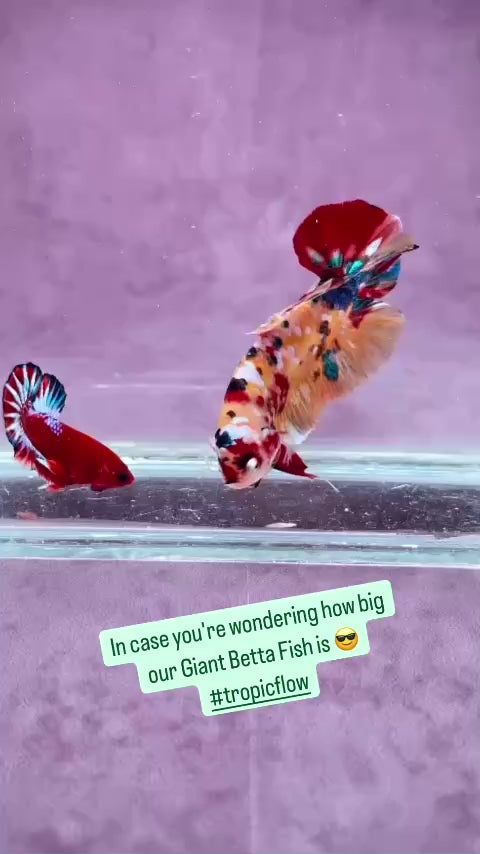
One of the most common questions from hobbyists is: How big do Giant Betta Fish get?
Adult size can vary depending on genetics, age, sex, diet, and husbandry. Some Giant Betta Fish can reach approximately 3 to 5 inches in overall length, making them noticeably larger than a standard domestic Betta.
Not every fish labeled βGiantβ will reach exactly the same size.
When evaluating a Giant Betta, look at the overall body structure rather than focusing only on one measurement.
Typical Giant characteristics may include:
- Larger head
- Longer body
- Greater body depth
- Heavier frame
- Strong overall proportions
- Genetics from established Giant Betta lines
Young Giant Bettas may also continue growing after purchase.
Giant Betta Fish vs. Regular Betta Fish
The most obvious difference between a Giant Betta Fish and a regular Betta is body size.
Standard domestic Bettas are often admired for their dramatic fins, but Giant Bettas create their visual impact through their larger body and powerful overall appearance.
A Giant Betta may have:
- A noticeably larger head
- A thicker body
- More body mass
- Stronger-looking proportions
- A more commanding presence in the aquarium
This difference is especially noticeable with Giant Plakat Bettas because their shorter fins make the actual body size easier to see.
Despite their larger size, Giant Bettas are still Betta splendens and require similar basic care, including warm water, stable water parameters, gentle filtration, and an appropriately sized aquarium.
What Is a King Giant Betta Fish?
You may see several names used when shopping for larger Bettas, including:
- King Betta
- King Giant Betta
- Giant Betta
- Jumbo Betta
These names are not always used exactly the same way by every breeder or fish seller.
At Tropicflow Aquatic, King Giant Betta Fish refers to our selectively bred larger Giant lines, especially large-bodied King Giant Plakat Male Bettas.
When shopping for a King Giant Betta Fish, it is better to evaluate the actual fish, body structure, approximate size, coloration, and breeder line instead of relying only on the name.
Why Are Giant Plakat Bettas So Popular?
Giant Plakat Bettas combine a large body with shorter fins, creating a powerful and athletic appearance.
Compared with long-finned Betta varieties, Plakat Bettas have shorter, more compact fins.
When combined with Giant genetics, this creates a very distinctive appearance:
Large head + thick body + short fins + strong coloration.
Because the fins are shorter, the actual size and structure of the fish become much more noticeable.
For this reason, Giant Plakat Male Bettas are especially popular with collectors who prefer a powerful-looking Betta rather than extremely long flowing fins.
Popular Giant Betta Fish Colors and Patterns
Being a Giant Betta does not determine the fish's color.
Giant Bettas can carry many of the same color and pattern genetics seen in other selectively bred Betta splendens.
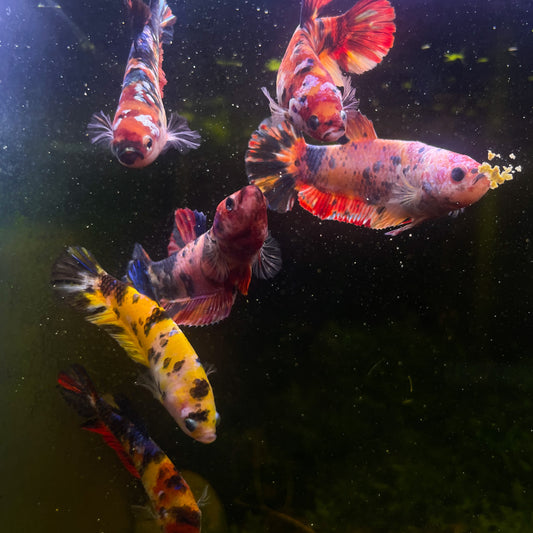
Depending on availability, Giant Betta Fish may be available in multicolor, koi, red, blue, black, metallic, galaxy, marble, and other specialty patterns.
Multicolor Giant Betta Fish
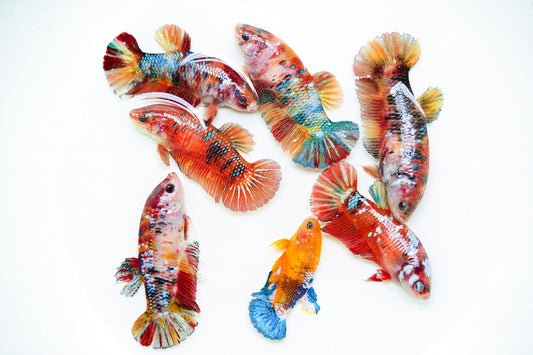
Multicolor Giant Bettas may display several colors across the body and fins.
A single fish may show combinations of red, blue, green, yellow, orange, black, white, and metallic coloration.
Because every multicolor Giant Betta can develop a different pattern, individually photographed You Pick Giant Bettas are especially appealing to collectors.
Koi Giant Betta Fish
Koi Giant Bettas feature irregular patches of contrasting colors across their bodies and fins.
Common colors may include red, white, black, orange, blue, and metallic tones.
The larger body of a Giant Betta creates more surface area for koi patterns, which can produce especially dramatic-looking fish.
Super Red Giant Betta Fish
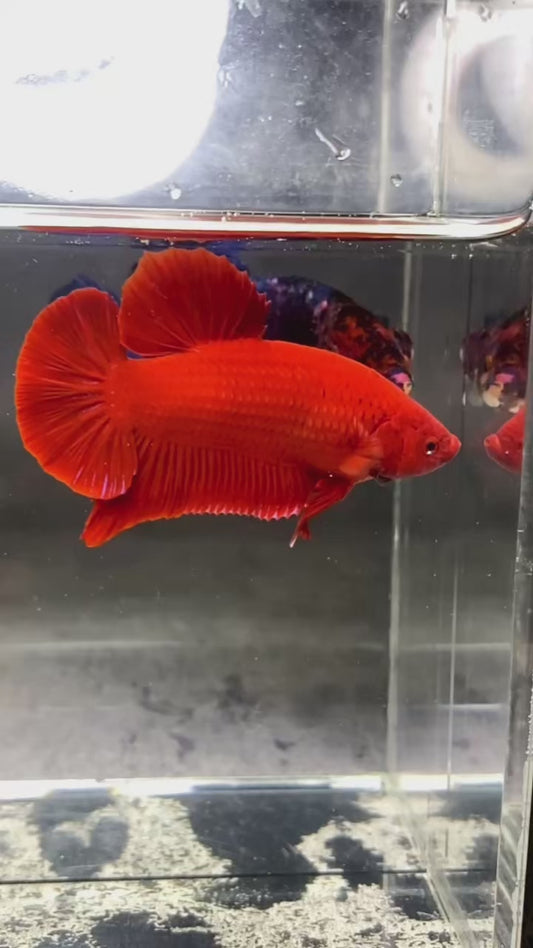
Super Red Giant Bettas feature strong red coloration across the body and fins.
These Bettas are an excellent option for hobbyists who prefer a bold solid-color fish rather than a complicated multicolor pattern.
A large-bodied Giant Betta with deep red coloration can become an impressive centerpiece in a planted aquarium.
Metallic and Galaxy Giant Bettas
Giant Bettas can also be selectively bred with metallic or galaxy-style coloration.
Reflective scales may produce blue, green, copper, silver, or gold flashes under aquarium lighting.
Because Betta genetics continue to develop through selective breeding, available Giant Betta colors and patterns can change from one batch to another.
Giant Male Betta Fish
Giant Male Betta Fish are especially popular because of their strong colors, large bodies, and territorial display behavior.
Like other male Bettas, Giant males may flare when they see another Betta, their reflection, or something they interpret as a rival.
However, a healthy Betta should not be forced to flare constantly.
A comfortable Giant Male Betta should also spend time:
- Exploring the aquarium
- Swimming through plants
- Resting near the surface
- Looking for food
- Investigating decorations
- Resting on broad leaves
Flaring is a natural behavior, but it should not be the fish's only activity.
Giant Betta Fish Tank Size
Because Giant Bettas have larger bodies than standard Bettas, they benefit from more swimming space.
For a Giant Betta Fish, we recommend an aquarium of approximately 10 gallons or larger whenever possible.
A larger aquarium provides several benefits:
- More swimming space
- More room for plants
- Greater water volume
- More stable water conditions
- More enrichment opportunities
- More flexibility when aquascaping
Tank dimensions are also important.
Bettas frequently swim to the water surface to breathe, so an aquarium with good horizontal swimming space is often preferable to a very tall, narrow tank.
Giant Betta Fish Water Parameters
Stable water conditions are extremely important for Giant Betta Fish.
Recommended general parameters include:
- Tank Size: 10 gallons or larger
- Temperature: Approximately 76β81Β°F
- pH: Approximately 6.5β7.5
- Ammonia: 0 ppm
- Nitrite: 0 ppm
- Nitrate: Keep low
- Water Flow: Gentle
- Tank Cover: Recommended
Avoid constantly adjusting the aquarium simply to reach an exact pH number.
Stable, clean, warm water is more important than chasing a perfect number.
Always prepare and cycle the aquarium before bringing home your Giant Betta whenever possible.
Does a Giant Betta Fish Need a Heater?
In most homes in the United States, a Giant Betta Fish should have an aquarium heater.
Betta splendens are tropical fish and do best in consistently warm water.
Use an appropriately sized aquarium heater together with a thermometer.
Do not rely only on the number printed on the heater. Always check the actual water temperature.
Stable temperature is especially important when your Giant Betta has recently arrived after shipping.
Does a Giant Betta Fish Need a Filter?
Yes.
A Giant Betta aquarium should have filtration to help maintain water quality.
However, the water flow should not be excessively strong.
Giant Plakat Bettas may be powerful swimmers, but they still appreciate calmer areas where they can rest.
Good filtration options may include:
- Sponge filters
- Adjustable-flow filters
- Low-flow hang-on-back filters
- Filters combined with plants and decorations to reduce current
You can also use live plants, driftwood, and aquarium-safe decorations to create areas protected from stronger flow.
Best Plants for Giant Betta Fish
Giant Betta Fish look especially impressive in planted aquariums.
Good aquarium plants include:
- Anubias
- Java fern
- Cryptocoryne
- Aquarium moss
- Floating plants
- Amazon sword in appropriately sized tanks
Broad-leaf plants are especially useful because Bettas often rest on leaves near the water surface.
Floating plants can also provide shade and overhead cover.
However, always keep part of the water surface open so the Betta can easily breathe.
Indian Almond Leaves for Giant Betta Fish
Indian almond leaves are commonly used in Betta aquariums.
As dried Indian almond leaves break down, they release tannins into the water and can create a natural botanical or blackwater appearance.
Indian almond leaves can be combined with:
- Driftwood
- Live plants
- Dark substrate
- Aquarium-safe botanicals
However, Indian almond leaves are optional.
A Giant Betta Fish does not require dark brown water to remain healthy.
Stable temperature, clean water, proper filtration, and a cycled aquarium remain the most important priorities.
What Do Giant Betta Fish Eat?
Giant Betta Fish should receive a high-quality, protein-rich diet.
Suitable foods may include:
- High-quality Betta pellets
- Frozen brine shrimp
- Daphnia
- Appropriate frozen foods
- Bloodworms as an occasional food
- Suitable live foods
Because Giant Bettas are larger than standard Bettas, they may require a larger total amount of food.
However, larger size does not mean unlimited feeding.
Avoid overfeeding.
Too much food can contribute to digestive problems and poor water quality.
Feed based on the individual fish's size, activity level, and body condition.
Can Giant Male Betta Fish Live Together?
Male Giant Bettas should not be kept together in the same aquarium.
Male Betta splendens are territorial, and Giant Bettas still retain this behavior.
Keeping two male Giant Bettas together can lead to severe fighting and injury.
Each male should have his own appropriately sized aquarium.
Can Giant Betta Fish Live With Other Fish?
Some Giant Bettas may tolerate carefully selected peaceful tank mates, while others may be extremely territorial.
Every Betta has an individual personality.
Do not assume that your Giant Betta will accept tank mates simply because another person's Betta does.
If attempting a community setup, provide:
- A sufficiently large aquarium
- Plenty of live plants
- Hiding areas
- Visual barriers
- Peaceful tank mates
- A backup plan if aggression occurs
When in doubt, keeping a Giant Betta alone in a properly equipped aquarium is a simple and attractive option.
Giant Betta Fish After Shipping
It is normal for a Giant Betta Fish to look different immediately after shipping.
During transportation, a Betta may temporarily show:
- Faded coloration
- Clamped fins
- Reduced appetite
- Hiding behavior
- Resting near the bottom
- Lower activity levels
Shipping stress can temporarily reduce the fish's color and activity.
Keep aquarium lighting low during the initial acclimation period and give the fish time to settle into its new environment.
Avoid unnecessary handling.
Do not pour shipping water directly into the aquarium when transferring your Betta.
A properly prepared, warm, stable aquarium can make the transition much easier.
Buying Giant Betta Fish Online
When looking for Giant Betta Fish for sale online, do not focus only on size.
Consider the entire fish.
Important characteristics include:
- Body proportion
- Body condition
- Fin condition
- Color quality
- Pattern
- Activity
- Overall symmetry
- Approximate size
- Whether you can select the exact fish
Because Giant Bettas can vary significantly in size, body structure, and coloration, individually photographed You Pick listings allow shoppers to select the specific fish they prefer.
This is especially useful for multicolor, koi, metallic, and other highly variable Giant Betta Fish.
Giant Betta Fish for Sale at Tropicflow Aquatic
Tropicflow Aquatic offers a changing selection of Giant Betta Fish for sale online in the United States.
Depending on availability, our Giant Betta collection may include:
- King Giant Plakat Male Betta Fish
- Multicolor King Giant Betta Fish
- Super Red Giant Betta Fish
- Giant Female Betta Fish
- Koi Giant Betta Fish
- Specialty Giant Betta varieties
- Individually photographed You Pick Giant Bettas
Many premium Giant Bettas are available only in limited batches.
Colors, patterns, and individual fish can change frequently as new Giant Betta shipments and breeding lines become available.
If you find a specific Giant Male Betta Fish that fits your aquarium and personal preference, selecting an individually photographed fish gives you more control over the exact color, pattern, and body structure you bring home.
Giant Betta Fish FAQ
What is a Giant Betta Fish?
A Giant Betta Fish is a selectively bred form of Betta splendens developed for increased body size. Giant Bettas are not a separate species.
How big do Giant Betta Fish get?
Adult size varies depending on genetics, age, diet, sex, and husbandry. Some Giant Betta Fish may reach approximately 3 to 5 inches in overall length.
What size tank does a Giant Betta Fish need?
A 10-gallon aquarium or larger is recommended for Giant Betta Fish whenever possible. A larger tank provides additional swimming space and greater water volume.
Is a King Betta the same as a Giant Betta?
The terminology is not completely standardized. King Betta, King Giant Betta, Giant Betta, and Jumbo Betta may be used differently by different breeders and sellers. At Tropicflow Aquatic, King Giant refers to our selectively bred larger Giant lines.
Are Giant Bettas aggressive?
Male Giant Bettas can be territorial, just like other male Betta splendens. Male Giant Bettas should not be housed together.
Can Giant Betta Fish live with other fish?
Some Giant Bettas may tolerate carefully selected peaceful tank mates in a sufficiently large aquarium, while others may be too territorial. Compatibility depends on the individual fish and aquarium setup.
Do Giant Bettas need a heater?
Yes, in most U.S. homes. Giant Bettas are tropical fish and should be maintained at a stable warm water temperature.
Do Giant Bettas need a filter?
Yes. Gentle filtration helps maintain good water quality. Avoid excessive water flow and provide calm resting areas.
What do Giant Betta Fish eat?
Giant Bettas should receive a protein-rich diet including quality Betta pellets and appropriate frozen or live foods such as brine shrimp and daphnia.
Are Giant Bettas different from regular Bettas?
Giant Bettas are still Betta splendens, but they have been selectively bred for larger body size. Their care requirements are similar, although their larger body makes a larger aquarium preferable.
Where can I buy Giant Betta Fish?
Tropicflow Aquatic offers Giant Betta Fish for sale online in the United States, including King Giant Plakat males, multicolor Giant Bettas, solid-color Giants, females, and specialty varieties when available.