Premium Blue Guppy Fish – Brilliant Color for Your Freshwater Aquarium
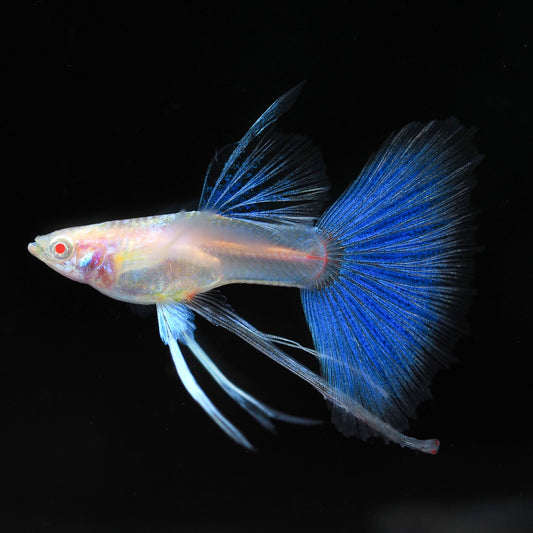
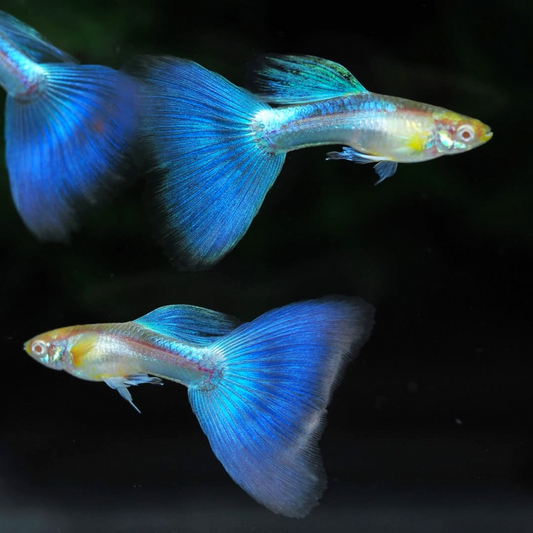
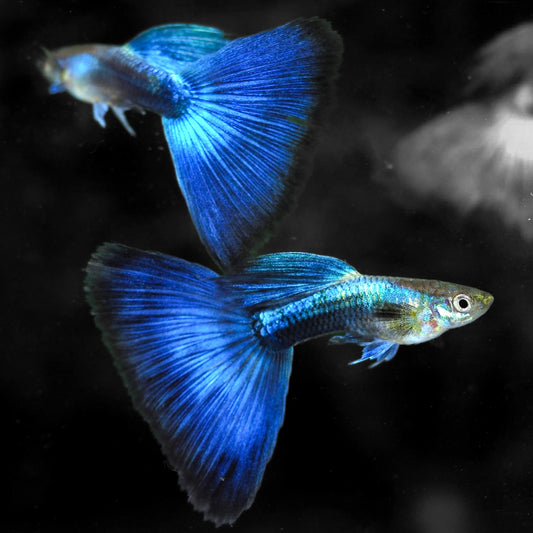
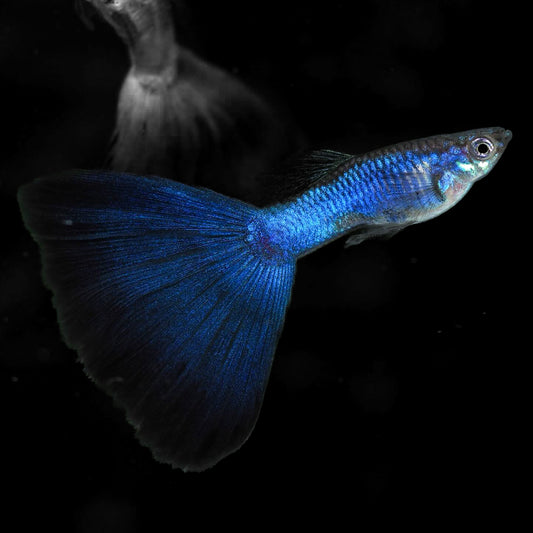
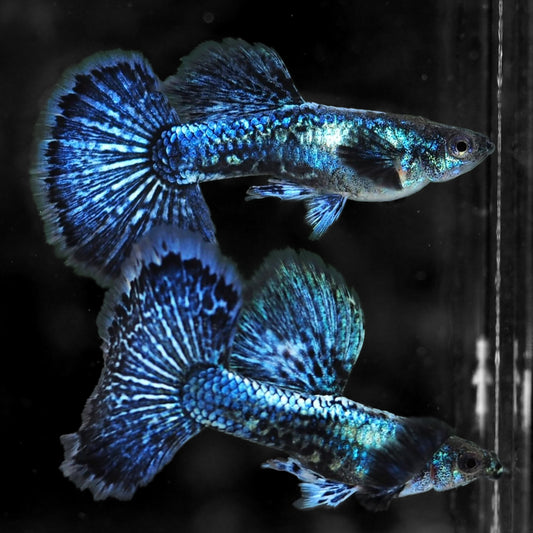
Few freshwater fish can match the vibrant appearance of a blue guppy. With shimmering scales, flowing tails, and colors ranging from pale sky blue to electric blue, royal blue, metallic blue, and deep navy tones, blue guppies can instantly become the focal point of an aquarium.
The term blue guppy includes many selectively bred fancy guppy strains that feature blue as one of their dominant colors. Some varieties display nearly solid blue coloration, while others combine blue with black, silver, white, mosaic patterns, dragon scales, or decorative finnage.
This variety is what makes collecting blue guppy fish so interesting. Aquarists can build an entire aquarium using different shades of blue while still enjoying completely different patterns, tail shapes, and body styles.
Whether you are looking for a single showpiece fish or building a colorful guppy community, the Premium Blue Guppy Collection offers a wide range of possibilities for freshwater aquarium enthusiasts.
What Is a Blue Guppy?
A blue guppy is a selectively bred guppy variety that displays blue coloration across part or most of its body and fins.
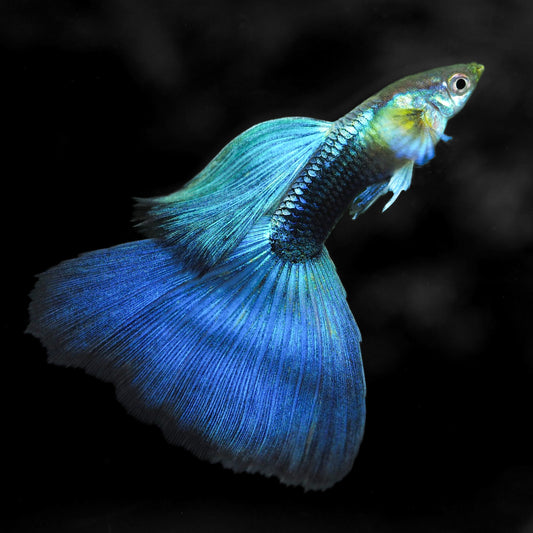
Blue coloration can look dramatically different from one strain to another. Some guppies display bright electric-blue bodies, while others may appear metallic, turquoise, navy, violet-blue, or silver-blue depending on genetics, aquarium lighting, and viewing angle.
In patterned strains, blue may appear mainly in the tail or dorsal fin. Other strains can develop blue coloration across much of the entire body.
This means that “blue guppy” describes a broad group of fancy guppies rather than one single strain.
Because each strain has its own genetics and appearance, blue guppy enthusiasts can choose from solid-looking fish, patterned fish, large-tail varieties, Ribbon Fin guppies, Dragon guppies, Grass guppies, and other specialty forms.
Why Are Blue Guppies So Popular?
The popularity of the blue guppy comes from its combination of intense coloration, small size, active behavior, and enormous variety.
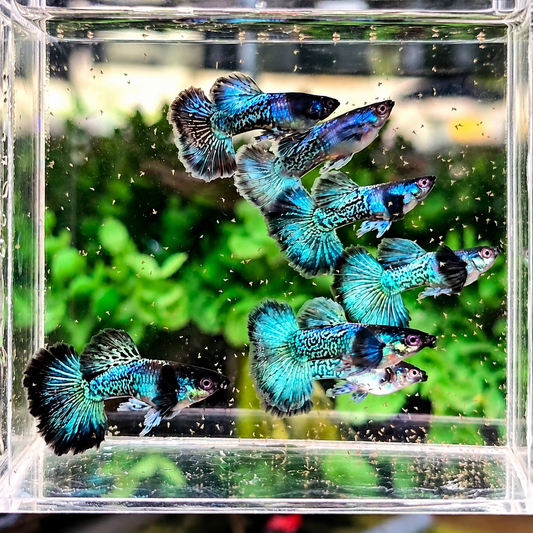
Blue is especially striking in freshwater aquariums because it creates strong contrast against green aquatic plants, natural wood, darker aquarium backgrounds, and lighter-colored substrates.
Under quality aquarium lighting, metallic blue scales can reflect light as the guppy moves through the water. The color may appear slightly different depending on the viewing angle, creating additional depth and movement.
Blue guppies are also available in many different patterns and fin types. This allows aquarists to create an aquarium centered entirely around blue fish without every guppy looking identical.
For hobbyists who enjoy fancy guppy fish, a blue-themed collection can include everything from elegant solid-colored varieties to dramatic patterned strains with oversized tails.
Different Types of Blue Guppy Fish
One of the most exciting parts of collecting blue guppies is discovering how many different strains can display blue coloration.
Blue Topaz Guppy
The Blue Topaz Guppy is one of the most recognizable blue fancy guppy varieties. It is known for bright blue coloration that may appear electric, turquoise, or metallic depending on genetics and lighting.
Some Blue Topaz strains are also developed with larger dorsal fins, specialty tail shapes, or unique fin traits, adding even more visual impact.
Blue Grass Guppy
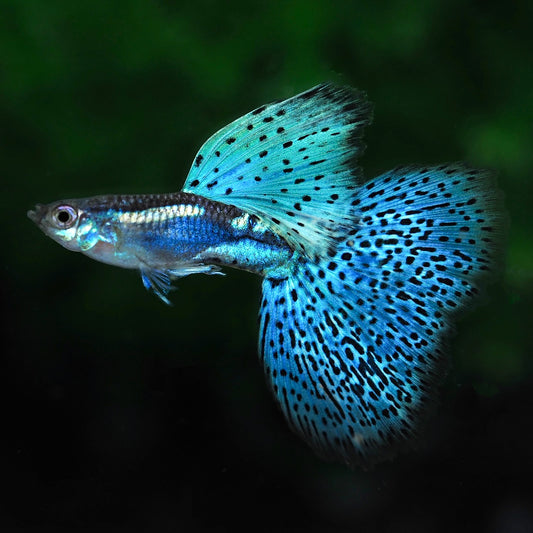
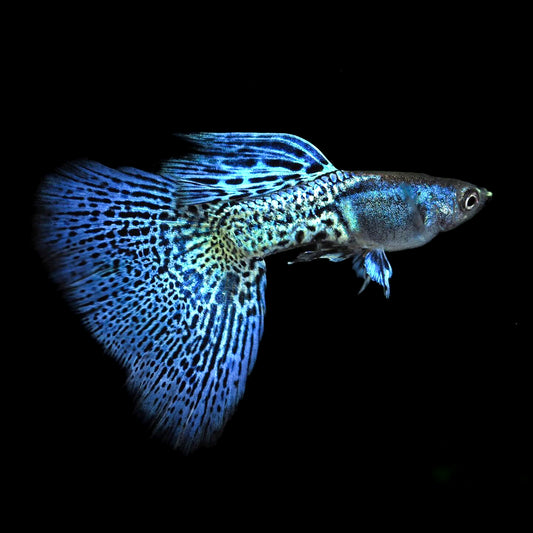
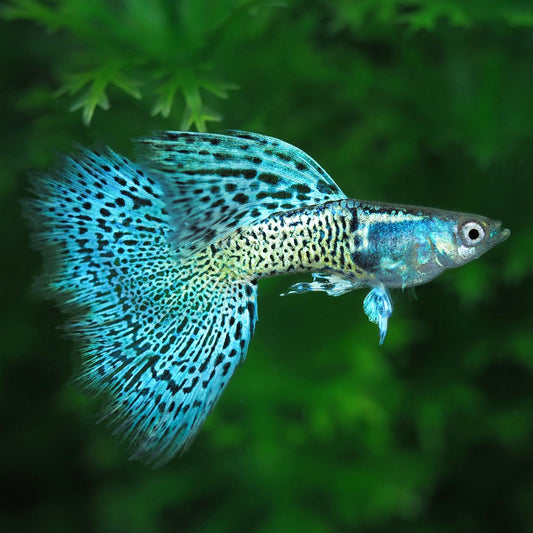
The Blue Grass Guppy combines beautiful blue coloration with fine patterning across the tail and fins.
Instead of a completely solid appearance, the Grass pattern produces a more detailed look that can resemble tiny markings spread throughout the tail. This makes Blue Grass varieties especially attractive to hobbyists who enjoy patterned fancy guppies.
Blue Dragon Guppy
The Blue Dragon Guppy combines blue coloration with the bold scale appearance associated with Dragon-style guppies.
Its body may display metallic or reflective scale patterns while the fins provide additional blue coloration and contrast. This combination creates a powerful look that stands apart from softer Blue Topaz or Grass-style varieties.
Half Black Blue Guppy
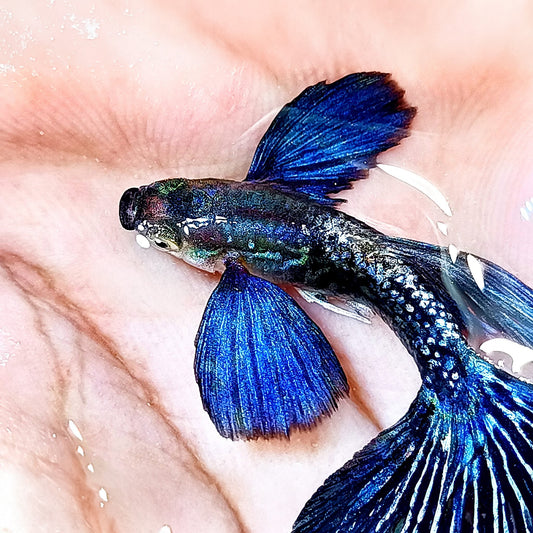
The Half Black Blue Guppy creates dramatic contrast by combining darker body coloration with vibrant blue fins or blue sections of the body.
The dark and blue combination can appear especially striking against green plants and lighter aquarium backgrounds.
Blue Japan Guppy
Blue Japan Guppies are appreciated for their blue coloration and elegant overall appearance. Depending on the individual strain, the blue can appear lighter, more metallic, or more reflective than many darker blue varieties.
Metal Blue Grass Guppy
Metal Blue Grass varieties combine metallic coloration with Grass-style patterning, creating a detailed blue fancy guppy with both reflective color and decorative finnage.
These differences mean that a blue guppy aquarium does not have to look repetitive. Multiple blue strains can be combined to create different shades, patterns, and movement throughout the tank.
Blue Guppy Colors Can Look Different Under Aquarium Lighting
One of the most interesting features of a blue guppy fish is how its coloration can change visually under different conditions.
A fish that appears dark navy from one angle may show bright royal blue or metallic highlights when it turns toward the aquarium light.
Lighting intensity, background color, substrate, plant placement, and even the viewing angle can influence how blue coloration appears.
Genetics also plays the largest role in determining the overall color and pattern of each individual fish.
Because guppies are living animals, natural variation should always be expected. Two fish from the same strain may display slightly different shades, markings, tail shapes, or color intensity.
This natural variation is part of what makes collecting fancy guppies so enjoyable.
Blue Guppy Care
Despite their impressive appearance, blue guppies generally have the same basic care requirements as other fancy guppy varieties.
They do best in a properly cycled freshwater aquarium with stable water conditions, reliable filtration, appropriate nutrition, and adequate swimming space.
A tank of approximately 10 gallons or larger is a practical starting point for a small group of guppies. Larger aquariums can provide more swimming space and usually make stable water quality easier to maintain, particularly when keeping larger groups.
A general temperature range of approximately 72–82°F and a pH around 6.8–7.8 works well for many guppy varieties.
Ammonia and nitrite should remain at 0 ppm, and sudden changes in temperature or water chemistry should be avoided.
Stable conditions are more important than repeatedly attempting to adjust the aquarium to one exact number.
Best Aquarium Setup for Blue Guppies
A well-designed aquarium can make the colors of a blue guppy look even more impressive.
Planted aquariums work particularly well because green aquatic plants naturally contrast with blue coloration.
Plants such as Anubias, Java Fern, Cryptocoryne, Amazon Sword, and aquarium moss can provide structure and cover without eliminating important open swimming areas.
A darker background can make bright electric and metallic blue guppies stand out dramatically. Light-colored sand or natural gravel can create additional contrast with darker varieties such as Half Black Blue Guppies.
The goal should be to create a balance between open swimming space and planted or decorated areas where fish can retreat when needed.
Moderate water movement is generally appropriate. Guppies are active swimmers, but extremely strong flow is unnecessary, especially for males with large decorative tails.
What Do Blue Guppy Fish Eat?
Like other fancy guppies, blue guppy fish are omnivores and benefit from a varied diet.
A quality guppy pellet, micro pellet, or appropriately sized flake can provide the foundation of their regular feeding routine.
Foods such as brine shrimp and daphnia may also be offered for variety.
Feed manageable portions rather than adding excessive food at once. Uneaten food can break down in the aquarium and negatively affect water quality.
Good nutrition works together with stable water conditions to support normal growth, activity, finnage, and coloration.
Food alone cannot change a guppy's genetics, but appropriate nutrition can help fish display their natural potential.
Male vs. Female Blue Guppy
Male and female blue guppies often have noticeably different appearances.
Male guppies typically develop slimmer bodies, stronger coloration, and larger decorative fins. Their tails and dorsal fins may be especially prominent, which is why males are frequently selected for display aquariums.
Female guppies generally develop fuller bodies and may display less intense coloration depending on the strain.
However, female appearance can vary significantly between different bloodlines, and some selectively bred females can still show attractive blue coloration.
Both males and females can be valuable depending on whether your goal is creating a display tank, maintaining a community aquarium, or working with a breeding group.
Can Male and Female Blue Guppies Live Together?
Yes. Male and female guppies can live together, but aquarists should remember that guppies are livebearers and can reproduce readily.
If mature males and females are kept together, guppy fry may eventually appear in the aquarium.
Male guppies may also frequently pursue females, so mixed groups should have appropriate space and cover.
Aquarists who want a colorful display without breeding may prefer keeping a same-sex group.
If maintaining the genetics of a particular blue guppy strain is important, different breeding lines should be managed carefully to prevent unwanted crosses.
Are Blue Guppies Good Community Fish?
Blue guppies are generally peaceful fish and can work well in many freshwater community aquariums.
Potential tank mates should be peaceful, appropriately sized, and comfortable under similar water conditions.
Avoid aggressive species or persistent fin nippers, especially when keeping male fancy guppies with large flowing tails.
Tank size, stocking level, temperament, and water requirements should always be considered before combining different species.
A thoughtfully planned community aquarium allows the blue guppies to remain active while displaying their natural colors and finnage.
Blue Guppies for Planted Aquariums
A planted aquarium is one of the most attractive environments for displaying blue guppy fish.
Green plants create strong natural contrast with blue, turquoise, metallic, and navy-colored fish. As the guppies move between planted sections and open swimming areas, their coloration becomes especially noticeable.
For a dramatic display, a combination of a darker aquarium background, healthy green plants, natural hardscape, and bright blue guppies can create excellent visual contrast.
Blue guppies can also be paired with other guppy colors if you prefer a more colorful community.
However, an aquarium containing several different blue strains can create a unique monochromatic display where different shades, patterns, and fin types provide variety without losing the overall blue theme.
Blue Guppy vs. Other Fancy Guppies
A blue guppy is a type of fancy guppy selectively bred to emphasize blue coloration.
The term fancy guppy is much broader. It includes ornamental guppies bred for different colors, patterns, tail shapes, dorsal fins, body characteristics, and specialty traits.
Blue guppies can therefore belong to several fancy guppy categories at the same time.
For example, a guppy can be both blue and Dragon patterned. Another can be blue with Grass patterning. A Half Black Blue Guppy combines blue coloration with the Half Black trait, while specialty Blue Topaz varieties may also feature unique dorsal or tail characteristics.
This overlap is one reason guppy genetics and strain collecting can become such an interesting part of the aquarium hobby.
Can Different Blue Guppy Varieties Live Together?
Yes. Different blue guppy varieties can generally live together when they have compatible care requirements and the aquarium provides enough space.
Combining several strains can create an impressive all-blue display.
For example, the bright coloration of a Blue Topaz Guppy can contrast with the darker appearance of a Half Black Blue Guppy, while patterned Blue Grass or Blue Dragon varieties add additional texture.
If the aquarium is intended primarily for display, mixing different blue varieties can produce beautiful results.
If selective breeding is your goal, however, separate breeding groups may be necessary to preserve individual strains.
Shop Premium Blue Guppy Fish
Our Premium Blue Guppy Collection brings together colorful fancy guppies featuring beautiful shades of blue, unique patterns, and decorative fins.
Whether you love electric Blue Topaz coloration, detailed Blue Grass patterns, bold Blue Dragon scales, or the darker contrast of Half Black Blue Guppies, there are many ways to create a unique blue-themed freshwater aquarium.
Browse the collection above to discover available blue guppy fish, or explore our complete Fancy Guppy Collection for even more colors, patterns, fin types, and specialty strains.
Frequently Asked Questions About Blue Guppies
What is a blue guppy?
A blue guppy is a selectively bred fancy guppy that displays blue as a dominant part of its body or fin coloration. Different strains may display electric blue, metallic blue, turquoise, royal blue, navy, or other blue tones.
Are blue guppies natural?
The guppy species is naturally occurring, while the highly distinctive blue strains available in the aquarium hobby are the result of selective breeding over generations for desired colors, patterns, and fin characteristics.
What types of blue guppies are there?
There are many blue fancy guppy strains. Examples include Blue Topaz, Blue Grass, Blue Dragon, Half Black Blue, Blue Japan, and metallic blue varieties. Different breeders may also develop additional blue strains and fin types.
Are blue guppies easy to care for?
Blue guppies generally have similar care requirements to other fancy guppies. They do well in a properly cycled aquarium with stable water conditions, appropriate filtration, good nutrition, and adequate swimming space.
What size tank does a blue guppy need?
A 10-gallon or larger aquarium is a practical starting point for a small group of guppies. Larger tanks offer additional swimming room and can make stable water quality easier to maintain.
What temperature do blue guppies need?
A general temperature range of approximately 72–82°F is suitable for many guppy varieties. Avoid sudden temperature fluctuations and focus on maintaining stable aquarium conditions.
What do blue guppies eat?
Blue guppies are omnivores and can be fed a varied diet that includes quality guppy pellets, micro pellets, flakes, brine shrimp, daphnia, and other appropriately sized aquarium foods.
Why does my blue guppy look different under different lighting?
Metallic and reflective coloration can appear different depending on aquarium lighting, background color, viewing angle, and the individual fish's genetics. A blue guppy may therefore appear turquoise, royal blue, navy, or metallic blue as it moves through the aquarium.
Can blue guppies live with other fancy guppies?
Yes. Blue guppies can generally live with other fancy guppy varieties when the aquarium has enough space and appropriate water conditions.
Can different blue guppies breed together?
Yes. Different guppy strains can interbreed when mature males and females are housed together. Aquarists interested in maintaining a specific strain should manage breeding groups separately.
Are blue guppies good for planted tanks?
Yes. Blue guppies are excellent display fish for planted aquariums. Their blue coloration creates strong contrast against green aquatic plants, natural wood, and other aquascaping materials.
Where can I buy blue guppy fish online?
Tropicflow Aquatic offers a selection of blue guppy fish, including Blue Topaz, Blue Grass, Blue Dragon, Half Black Blue, and other specialty fancy guppy varieties. Browse the Premium Blue Guppy Collection above to see currently available fish.